13 November 2011
05 November 2011
Another List
04 March 2008
Triumph
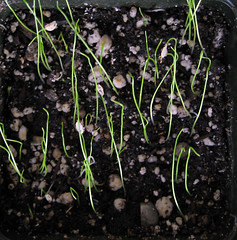
I have also managed to germinate Lilium bolanderi. I did at least know that this would be hard, so when I got the seed last winter I stratified half of it for about 8 weeks, and kept the other half in the freezer until I sowed it in October. Leaves appeared for the first time in each pot last week (at the same time as some L. pardalinum I treated the same as the first batch).
Conclusion: let nature take its course. I did probably get lucky with nature this year, as we've had 831 chilling hours so far this year, nearly twice what I take to be average. L. bolanderi lives higher and further north from me and so is probably accustomed to much more winter chill, not to mention snow cover.
Now to try not to kill it this summer.
Labels: Bulbinella, chilling hours, Lilium, seed, triumph
20 February 2008
Common
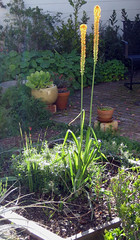
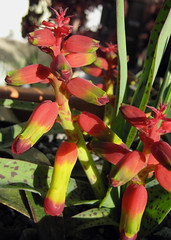
Now that it's started raining again, I can report that while it was sunny, Bulbinella latifolia and this Lachenalia rushed into bloom along with the crocus I mentioned. By the way, I have been castigated for not using common names, but does it really help you to know that the Lachenalia is called a "cape cowslip"? The Bulbinella doesn't even have a common name, as far as I know... When I started this, I didn't know shit about plants, so I made a point of learning their real names to be sure what I was talking about. But so many plants that grow here either have no common name, or a fake common name, or a common name that is meaningless to those of us who live continents away from its habitat, that it wouldn't make sense to use them even if I wanted to.
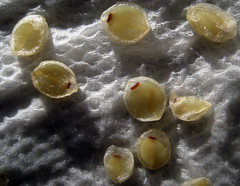
Anyway, the sun allowed me to inspect my seeds further. No sign of life yet from the Fritillaria recurva, but I haven't quite given up hope yet -- there are a few sign of life in the long-abandoned Penstemon grahamii pot, of all places; probably weeds, but you never know. And much to my surprise, I successfully germinated Castilleja applegatei var. pinetorum: common, nay, vulgar name "indian paintbrush" (and unlike I. niamniamensis, it memorializes nothing but stupidity). The hard part is apparently not germination (not if I can do it), but getting them to grow: it is a hemiparasite. No one knows what the host species is (are?).
All Castillejas are parasites by the way. They've been transferred from the Schrophuliariaceae to Orobanchaceae. Commonly called, as those of you who profess to value such names will be dismayed to learn, "the broom rape family."
Labels: colonialism, Lachenalia, names, seed
07 January 2008
Springtime
The "storm" was negligible here, but we got a nice accumulation of ~3.5 inches, which I figured out no thanks to the NWS, which has apparently abandoned its bay area weather stations. I also learned that we've had 400+ chill hours already this year, twice normal, which explains why my @#*! gas bill is so ridiculous, but not why the 'Double Delight' rose is still blooming when I should be doing its dormant pruning.
*
Anyway, although html tables aren't the best place to keep track of my germination rates, I'm too lazy/stupid to use Excel, so you can stop reading now. Unless you too are a huge dork. All from Northwest Native Seed.
| sp. | AN | soak | strat. | germ. | Notes | ||
|---|---|---|---|---|---|---|---|
| Calochortus bruneaunis | NNS 05-121 | 1/6 | 1/7-2/5 | 2/3 | |||
| C. dunnii | NNS 04-65 | 1/6 | 1/7-2/16 | 2/15 | |||
| C. howellii | NNS 05-136 | 1/6 | 1/7-3/8 | y*** | |||
| C. invenustus | NNS 05-137 | 1/6 | 1/7-3/8 | y | |||
| C. simulans | NNS 05-155 | 1/6 | 1/7-1/27 | ~1/26 | |||
| C. striatus | NNS 05-157 (2) | 1/6 | 1/7-1/20 | ~1/18 | |||
| C. venustus | NNS 05-171 | 1/6 | 1/7-2/5 | 2/3 | |||
| Dicentra formosa ssp. oregana D* | NNS 07-159 | 1/6 | 1/7-3/8 | almost?! | 3/8: seed coat split and radicle visible, though not yet emerged | ||
| Dicentra formosa ssp. oregana W* | NNS 07-159 |
| n/a | [potted up 1/20 because of apparent mold on elaisosomes] | |||
| Castilleja applegatei var. pinetorum** | NNS 06-120 | 1/7 | 1/8-3/8 | y | |||
| Dodecatheon poeticum** | NNS 07-169 | 1/7 | 1/8-3/8 | ? (too small) | |||
| Fritillaria biflora | NNS 05-345 (2) | 1/7 | 1/8-3/8? | 1 | |||
| F. eastwoodiae | NNS 07-250 | 1/7 | 1/8-3/8 | y | |||
| Ipomopsis aggregata var. aggregata | NNS 07-277 | 1/7 | 1/8-3/8 | y | |||
| Lilium rubescens x L. bolanderi | NNS 06-338 | 1/7 | 1/8- | n | |||
| Lupinus microcarpus var. densiflorus | NNS 03-405 | 1/7 | 1/8-1/17 | ~1/14 | |||
| Penstmon labrosus | NNS 05-548 | 1/7 | 1/8-2/5 | 2/3 |
** damp sand in ziplocs; too small for paper towel.
15 October 2007
Hope falls eternal
Sowing these seeds I ordered six months ago, I had to wonder: what the fuck was I thinking? 5 Romuleas? I have no idea. On the other hand, it made sense to order those from Silverhill, since they are unusual and hard to come by, unlike Ornithogalum. It's a mystery.
| Babiana villosa | Silverhill |
| Erythronium californicum 'White beauty' | paintbrush |
| Freesia alba x purple stripe | paintbrush |
| Freesia refracta | Silverhill |
| Geissorhiza splendidissima | Silverhill |
| Hesperantha coccinea | Silverhill |
| Lachenalia orchoides var. orchoides | Silverhill |
| Ornithogalum maculatum | Silverhill |
| Lilium bolanderi | Alplains |
| Romulea amoena | Silverhill |
| Romulea hirsuta var. hirsuta | Silverhill |
| Romulea monadelpha | Silverhill |
| Romulea sabulosa | Silverhill |
| Romulea unifolia | Silverhill |
20 June 2007
On failure
My last discussion of seeds was prematurely triumphalist. The seeds I care most about -- the Calochortus and Fritillaria -- worked out fine (or seemed to: if I wanted to I could torture myself wondering whether they gone dormant or just died). But my assumption that the Allium and Erythronium would work out fine was of course unwarranted. Though I'm not giving up hope yet: assuming I failed to germinate seed that remains viable, nature, in the form of fall rains and diurnal temperature variation, will probably succeed where I failed.
But no sooner had I retired that batch for the season than my panicky order from Silverhill arrived: something like 20 more species from South Africa. Most of these can be sown in the fall, but a few demanded immediate attention, particularly the Haemanthus sanguineus, one of which had germinated en route. I have no idea why I stupidly ordered only 3 seeds, but you can imagine my reaction today when I discovered that the only one that sprouted had been mown down at soil level. Even if I knew the perp, the rage would remain self-directed for ordering so few.
On the other hand, I'm finally getting some action from Cyrtanthus obliquus, so I need to concentrate on not fucking that up, instead of wallowing in self-pity and/or -hatred. Onward and upward!
03 April 2007
Patience again
Just as last year, though, seeds generate the most anxiety. So for (my own, I know you couldn't care less) future reference, the germination update:
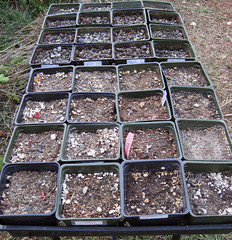
(All seeds stratified in ziplocs of moist peat in the vegetable crisper the penultimate weekend of January, except the Alliums, which went in a week later. Bulb seeds in 4" plastic, everything else in flats. Timing info came mostly from Alplains.)
| Aquilegia eximia | Two seedlings in the same cell immediately after germination, 3rd just appeared (in same cell). |
| Allium amplectens | Sown after one month, without sign of germination, back into fridge after about a month to try to get something started. |
| Allium bisceptrum var. bisceptrum | Sown after c. 2 months, without sign of germination, no action yet. |
| Calochortus catalinae | germinated quickly and thoroughly, looking good. |
| Calochortus kennedyi var. kennedyi | Same as above, a week or two later. |
| Erythronium helenae | Same as Allium amplectens. |
| Erythronium tuolumnense | Recommended stratification not finished. |
| Fritillaria recurva (4 populations) | All germinated, planted out 10 days ago, sending up cotyledons now. |
| Lilium bolanderi | Nothing yet. |
| Lilium pardalinum ssp. pardalinum | Germinated after c. two months, planted out, presumably getting hypogeal. |
| Penstemon eatonii var. eatonii | Germinated, sending up cotyledons now. |
| Penstemon grahamii | Nothing yet. |
| Silene californica | Secondary leaves going up now. |
| Triteleia hyacintha | A single cotyledon appeared after planting out, up to 5 now (maybe I let it dry out too much?) |
Overall, I'm pretty happy about these results, assuming that the Alliums and Erythroniums will work out eventually.
Labels: Epipactis gigantea, list, patience, seed, spring
20 February 2007
Sprung
The Bilbergia that was threatening to bloom sometime in December was definitely slowed by the frost, but seems no worse for the wear. The pomegranate has leafed out, there are nascent buds on the Distictis buccinatoria and the Brugmansia has almost recovered all of the leaves lost in the frost. All we need is a little more rain.
The seeds are starting too: Calochortus catalinae germinated in about 18 days in the fridge, C. kennedyi 10 days later. The crunch is going to come in two weeks, when I'll have to plant out the first batch en masse.Away from the garden it was a horticulturally eventful weekend, with the Pacific Orchid Exposition (not really my thing) and a CalHort talk on Calochortus (great slides, not so much info). I learned of an amazing plant that I had to have, which, thankfully, turned out to be a myco-heterotroph. Cross that one off the list.
Labels: Bilbergia, Calochortus, seed, spring
12 February 2007
Crack Kills
Did you know FUCK can be a six syllable word?
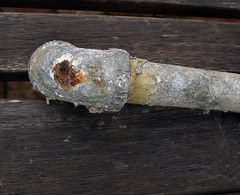
The water, we discovered 17 hours and several hundred dollars later, was gushing from this tiny pinhole in an elbow between floors [the crack noted above refers to what people were smoking when they decided that galvanized steel was a suitable material to deliver your water supply.]
Since Saturday was devoted to plumbing, Sunday was spent on the painting we were supposed to do Saturday, and gardening did not happen, despite an auspicious break in the rain yesterday.
I did have time to note a few developments, primarily monocotyledonous:
- Calochortus catalinae has started to germinate in its ziploc in the fridge. I should probably start checking these things at the beginning of the weekend.
- The rains persuaded Dichelostemma ida-maia to finally send up some leaves. Possibly Erythronium californicum too. Keep your fingers crossed: it lives almost directly under the site of the unfortunate PVC cement incident of September '06.
- Speaking of shame, the asphodel is shooting up virtually from the grave of the Deppea splendens, because I was totally unable to locate the former when I planted the latter in a location it obviously wanted nothing to do with.
- Other excitements include the emergence of some hybrid tulips; various flowering succulents -- including one that is going to BLOW YOUR MIND, as soon as I figure out what it is; and approximately 100 gazillion Nigella seedlings in the lawn. Maybe they'll slow down the bermuda grass.
Labels: Asphodelus, Calochortus, crack kills, Dichelostemma, Erythronium, monocotypalooza, seed, shame
22 January 2007
The madness
Every single seed I ordered this year requires stratification (except potentially for the alliums, which I can't figure out), so this weekend I painstakingly assembled a drawer full of dime bags in the fridge:
- Aquilegia eximia
- Allium amplectens
- Allium bisceptrum var. bisceptrum
- Calochortus catalinae
- Calochortus kennedyi var. kennedyi
- Erythronium helenae
- Erythronium tuolumnense
- Fritillaria recurva (4 populations)
- Lilium bolanderi
- Lilium pardalinum ssp. pardalinum
- Penstemon eatonii var. eatonii
- Penstemon grahamii
- Silene californica
- Triteleia hyacintha
Hopefully I'll have time so say something more substantial soon.
Labels: seed
09 January 2007
Horticultural therapy
Winter may have been mild so far, but don't try to tell that to my Agave attenuata, which looks about as vibrant as The Ohio State University's offensive line right now. Sorry, had to sneak a little football in there. Anyway, the agave will probably survive if I can manage to cover it before it gets really cold later this week, but it's not long for the open garden. I'm accepting suggestions for a hardier agave or aloe to replace it. Moderate spines only please.
Winter is a garden season here like any other, and though I'm pretty short on winter-flowering plants in my own garden, I went for a little walk the other day to see what's blooming. Most dramatic are the deciduous magnolias, of many varieties, with their huge, purple-flushed flowers on naked branches. There's some kind of rhododendron (I think) that I see all over the place). Camellias, of course, and aloes, particularly Aloe arborescens which seems to love it here. As far as traditional "winter interest" (i.e., not flowers) goes, there's the classic red-twig dogwood (Cornus sericea), one of which I noticed in the same yard with a "Sango kaku" Japanese maple, in a bizarre pigmented-branch smackdown.
Then my walk took a sinister turn. Whole lots carpeted with the monotonous pale yellow of Oxalis pes-caprae. This is the scariest weed I have ever dealt with. It goes to seed in days, and produces an apparently infinite number of corms ("bulblets"?) which instantly separate from the root if you try to pull it. Basically, any attempt to remove it succeeds only in spreading it. I have two weedy Oxalises: a dull yellow that I think is O. stricta, and a fleshy purple thing whose name I forget. The latter is particularly irritating, but it's nothing compared to the dreaded goat's foot. I'm fully prepared to nuke my neighbor's yard if it shows up there.
Anyway, despite the possibility of gardening, it's catalog time here just like the rest of the northern hemisphere. I thought I did pretty good to resist the blandishments of the (web-) famous Meliodendron xylocarpum (rare! beautiful! difficult! ... no room), until I moved on to the seed catalogs. Let's just say I bought an endangered penstemon endemic to Utah oil shales at 6000' [scroll down to P. grahamii]. That's going to love my yard. But the beauty of seed is that your failures set you back $3, not $30. And I'm hoping the endangeredness will inspire me to try a bit harder with the seeds this year. I need all the help I can get with seeds. (Of course, my source is cultivated plants, not the dwindling wild population. I'm not an animal.)