21 May 2008

The Ides of May

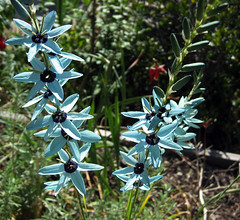
This will probably the the last picture I take in the garden for a while. Luckily, Ixia viridiflora bloomed just in time, and I got some decent pictures. With it, as usual, firecracker flower, Dichelostemma ida-maia, which I have not managed to photograph, though you can just see it in the background of this shot.

I looked into the name of D. ida-maia a few years ago, and read somewhere that it was named after a lady named Ida Mae. But I was never totally satisfied with this explanation, because it always blooms on May 15, which is the Ides of May, a date newly significant to me. So with the help of the internets, I tracked down Alphonso Wood's original 1867 description of what he called Brevoortia ida-maia:

This plant was first noticed by Mr. Burke, stage-driver, in his daily route, and by him my own attention was first called to it. He had given it the name of "Ida May, in affection for his little daughter,"—a name quite appropriate, moreover, as on the Ides (i.e., the 15th) of May, the plant begins to flower.

The type locality was on the stage road from Shasta City to Yreka.

Labels: , , , ,

18 October 2006

The Waste Land

I was working on a long post about California's "second spring" [we were laughing the other day about recent immigrants and their sad, predictable complaints about "seasons"], as well as the various failures this year [this list will have to be updated], but I don't have the energy. I spent the weekend excavating and building the raised bed, which gave me ample time to gauge the progress of my physical decrepitude, and also turn most of the yard into a desolate mud pit (punctuated with bermuda grass stolons). The end is finally near, but it hardly seems like it right now.

These flowers would have encouraged me, if there were more than two of them, and if the color had actually been "blood red" (The alleged "common" name of Distictis buccinatoria is blood red trumpet vine). A bit finer, perhaps, than common trumpet vine, and supposedly less "vigorous" (= weedy), but not long for the garden if it remains so stingy with the flowering.


Labels: , , ,

© 2006